
Precision matters in implant surgery. The Trimble Dental team uses advanced 3D imaging and computer-guided surgical technology to place implants with accuracy that improves outcomes and shortens healing time.
Computer-guided implant placement is an advanced approach to dental implant surgery that uses 3D cone beam CT imaging and digital surgical planning software to map every aspect of the procedure before it begins. A virtual model of the patient’s jaw, bone structure, and anatomy is created from the CT scan, and the Trimble Dental team uses that model to plan the exact position, angle, and depth of each implant on-screen.
A custom surgical guide is then fabricated from that digital plan. During the procedure, the guide directs implant placement with pinpoint accuracy, producing a more precise, less invasive, and more predictable outcome than traditional freehand implant surgery.

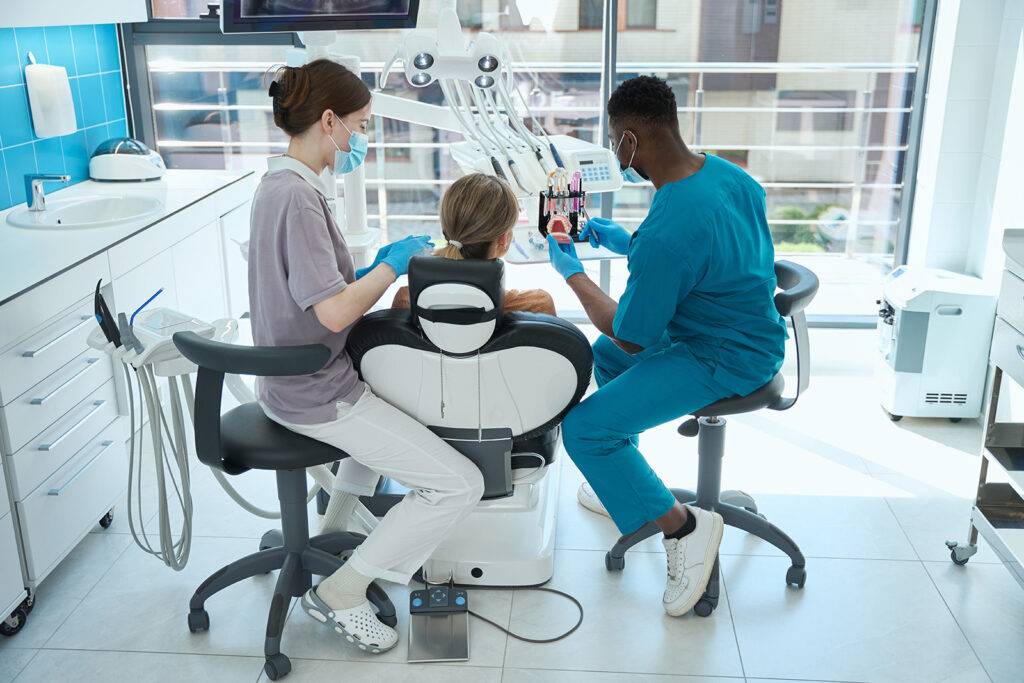
Benefit 1: Superior Accuracy
Guided placement removes the guesswork from implant surgery. Every measurement is planned digitally in advance, and the surgical guide ensures the implant is placed exactly where it was designed to go.
Benefit 2: Minimally Invasive Procedures
Because the placement is so precisely planned, guided surgery often requires smaller incisions and less disruption to surrounding tissue. Less trauma translates to less swelling, less discomfort, and faster recovery.
Benefit 3: More Predictable Outcomes
When implants are placed in the optimal position and angulation for the planned restoration, the final crown or prosthetic fits correctly the first time and integrates with the surrounding bite more naturally.
Benefit 4: Faster Healing
Reduced tissue trauma and precise positioning means patients at Trimble Dental typically experience shorter, less eventful healing periods compared to traditional implant placement approaches.
Benefit 5: Possible Same-Day Restorations
In select cases, the accuracy of guided placement makes it possible to attach a temporary restoration on the same day as the implant, allowing patients to leave with a tooth in place while healing occurs.
Step 1: Consultation and 3D Imaging
Your journey begins with a consultation at Trimble Dental in Menomonie, during which the Trimble Dental team takes a cone beam CT scan to create a complete 3D model of your jaw, bone density, and anatomical structures. This image captures everything needed to plan the procedure with precision.
Step 2: Digital Surgical Planning
The Trimble Dental team uses implant planning software to design the exact placement of every implant virtually. You will review the plan together on-screen so you understand every detail before any treatment begins.
Step 3: Surgical Guide Fabrication
A custom surgical guide is fabricated from the digital plan. This device fits over your teeth during the procedure and directs the Trimble Dental team’s instruments to the exact pre-planned position.
Step 4: Implant Placement
The procedure is performed using the surgical guide for precision and local anesthesia for comfort. Sedation is available for patients who prefer it. Most placements are completed more quickly than patients expect.
Step 5: Healing and Integration
The implant fuses with the jawbone over the following weeks. The Trimble Dental team monitors healing at scheduled follow-up appointments and confirms full integration before moving to the restoration phase.
Step 6: Final Restoration
Once integration is confirmed, the Trimble Dental team attaches the permanent crown, bridge, or full-arch prosthetic, completing the process entirely in-house.

Trimble Dental has served the Menomonie area for over 60 years. Here’s what our patients say about their experience.
The Trimble Dental team is happy to explain the guided implant process in detail and walk you through what to expect at every step.
Guided placement is appropriate for most single-tooth and multiple-tooth implant cases, as well as All-on-4 procedures. The Trimble Dental team evaluates each patient individually to determine whether guided surgery is indicated and will explain the approach best suited to your specific anatomy and treatment goals.
In many cases, guided placement reduces recovery time because the procedure is less invasive. Smaller incisions, less tissue manipulation, and precise implant positioning typically result in less swelling and discomfort compared to traditional freehand placement, though individual experiences vary.
3D cone beam imaging is a standard part of the implant planning process at Trimble Dental. The Trimble Dental team will explain the imaging process and any associated costs during your initial consultation so there are no surprises.
Both approaches are safe when performed by a qualified provider. Computer-guided placement adds an additional layer of precision that reduces the risk of complications associated with improper implant positioning. The Trimble Dental team uses guided technology precisely because it produces more reliable, predictable outcomes.